The Technological Reproducibility of the Artwork Changes the Relation of the Masses to Art
Summary "The Work of Fine art in the Age of Its Technological Reproducibility"
This is my commencement attempt at Academic writing. I take written a brusk summary on Walter Benjamin'southward Essay "The Work of Art in the Historic period of Its Technological Reproducibility". Whatsoever academic writers reading this are more than than welcome in correcting and providing feedback.
This essay by Walter Benjamin, published in 1936, sheds calorie-free on the impact of mass production on the work of Fine art and its traditional and individual uniqueness.
Walter Benjamin
The Work of Fine art in the Age of Its Technological Reproducibility
Summary
Published in 1936, Benjamin'south dissertation on the work of art is a discussion on the value of art and the influence of its technological reproduction on the capitalists and gild. He besides mentions Marx analysis on the capitalist mode of production during the industrial revolution; that discusses what could exist expected in future of the capitalist product, that is — the profiteering of the lower-class every bit well as the dissolution of commercialism. The influence of the technological reproduction of the work of art tends to play a pregnant role on the cultural and political values of the society and fascists. Where politicians used the art as a means of growing their political agenda into the people of society and controlled the exhibition every bit to convey only the letters and methods convenient to their ambitions. Club perceived art as a unique instrument of traditional values. The reproduction of art can contribute in manipulating the credible material in the favour of the fascists merely on the other paw, it tin can be beneficial in the revolution of politics of fine art.
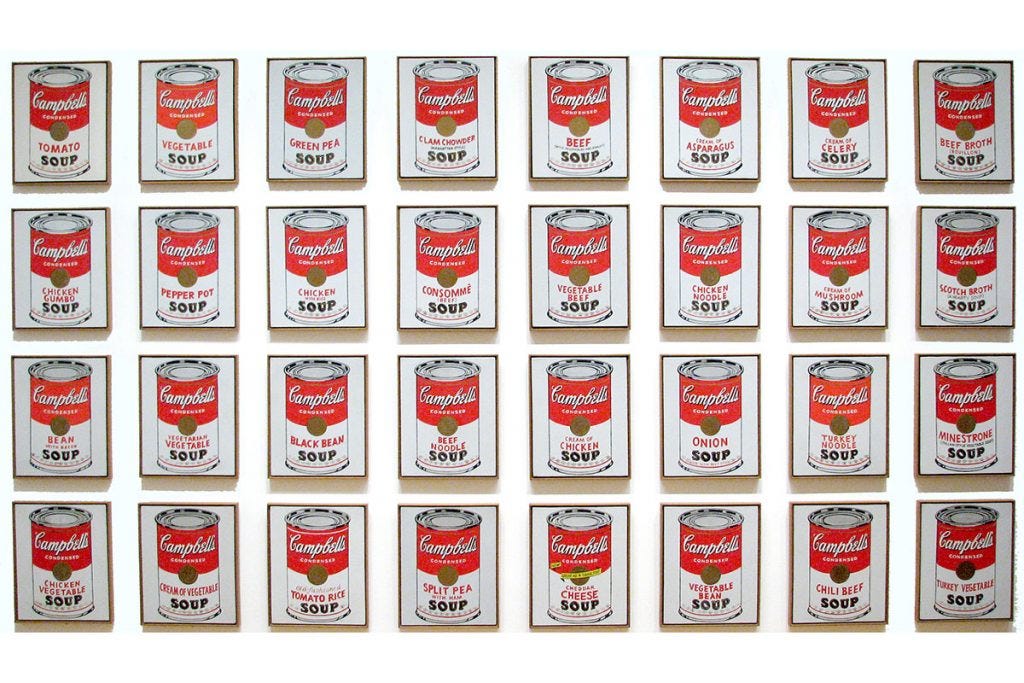
While people have always been able to replicate fine art through diverse methods since prehistoric ages. Upon the report of the history of fine art, information technology tin exist observed how humankind has progressed from cavern paintings to writing on stones and subsequently to carving on wood blocks. Fine art has e'er been reproduced through one style or another, sometimes for the student's artistic exercise purposes, master's exhibition of his work or for profiteers. Technological reproduction was something new, wood-cut being one of the earliest technique used in the reproduction of art, contested later in the nineteenth century by lithography.
Lithography avant-garde the reproduction of art by means of numbers likewise every bit variations. This led graphic art take its place in the everyday and domestic life of the society under the influence of materialism. A decade after, the invention of photography competed well in meeting such demands of society. Photography drew the mitt of artist abroad from the sheet as it relied simply upon the utilize of the eye as the tool. Indeed what could be fatigued by hand could now exist captured in a few moments, more than swiftly through the lens of the photographic camera. This accelerated the reproduction of art to a much higher speed and drive art into its manipulative properties.
A painting or image within its original class and land holds certain uniqueness of its history, which Benjamin describes as the 'aura' of art. This aura is the only and rare quality that surrounds art with its emotional and historical behavior. In 'The Salon of 1859', Charles Baudelaire describes photography every bit "… art's most mortal enemy, …" (Baudelaire, n.d.). Although a photo captures the moment in more accurate and swift way, is only the reflection of the moment, which can exist contradistinct by the means of lens and viewpoint during reproduction. This reproduction lacks the traditional value and historical proof of its beingness in its original grade. Benjamin states "In even the most perfect reproduction, one thing is defective: the here and now of the work of art — its unique existence in a item place" (Benjamin, 1936). A painting when drawn can have a cultural or emotional attachment between the artist and the subject and what the artist feels about it at that time. But on the other hand, the photograph of the same subject can be adapted and welded for a different audition at different times portraying different meanings, losing its original 'aura'. "If photography is allowed to complement art in some of its functions, the latter volition shortly be ousted and ruined past it …" (Baudelaire, n.d.).
The essence of originality in a work of art often lies in its tradition; which is lost with its reproduction. A painting made past an artist in a sure context of tradition, ritual and historical means may exist of entirely dissimilar context in a reproduced re-create present nether unlike circumstances at a different place. It is not only most the art but also the imagery we see or the sounds nosotros hear in a motion picture that create an artificial or contextual perception as per the demands of the producer. In theatres, the audience witnessed the one and truthful form of a operation and actors performed naturally and in a way that pleased their audition. This could now exist edited, manipulated and re-acted upon many times for the best shot under the orders of the directors. The audience now, in this context is your camera man, managing director and few more people that assistance in recording and the real viewers await the manipulated release to be enjoyed privately at dwelling.
The effect of manipulation and mass product on an original artwork or on its 'aura' is the major discussion signal for Benjamin in his essay. His predictions of this impact state two points — Firstly, the art will lose it's uniqueness and value under the influence of mass production. Secondly, how this mass production of art can influence and drive the gild out of the prowess of capitalism.
Notation: This is my showtime article and I would highly appreciate whatsoever feedback on the content as well every bit language and linguistic mistakes.
Give thanks you.
Source: https://medium.com/@shahbazmehdi/summary-the-work-of-art-in-the-age-of-its-technological-reproducibility-ea073a48cc2b

Post a Comment for "The Technological Reproducibility of the Artwork Changes the Relation of the Masses to Art"